
Post
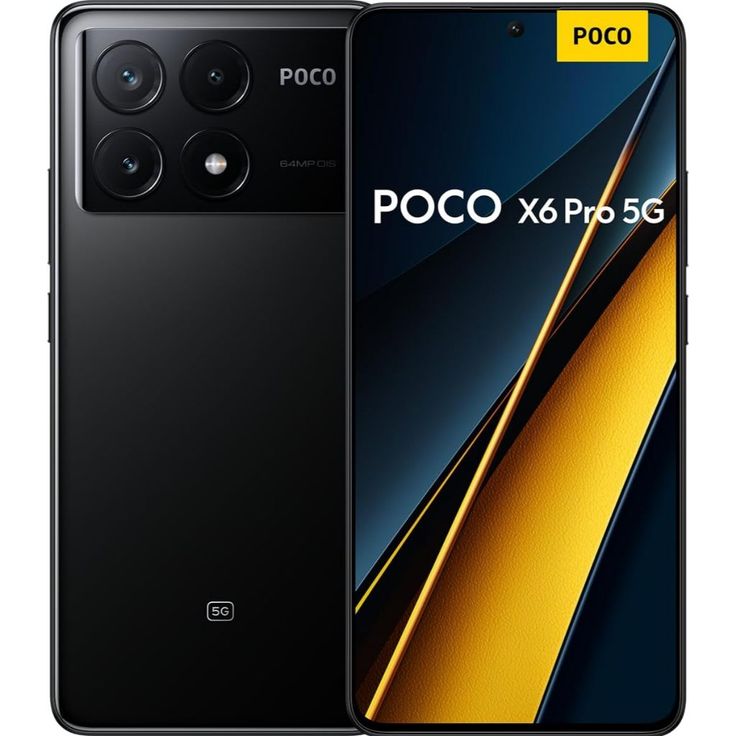
Xiaomi Poco X6 Pro – Affordable Gaming Phone
May
Xiaomi Poco X6 Pro
Introduction: The Undisputed King of Budget Performance
In the smartphone industry, the phrase “gaming phone” usually conjures images of massive, heavy devices adorned with RGB lighting, built-in cooling fans, and price tags that rival high-end laptops. For years, gamers on a strict budget were forced to settle for mid-range processors that choked under the pressure of graphically demanding titles, suffering through stuttering frame rates and uncomfortably hot devices.
Then came the Xiaomi Poco X6 Pro.
Launched with the explicit goal of democratizing high-end performance, the Poco X6 Pro completely shattered the expectations of the mid-range market. Earning its title as the definitive “Affordable Gaming Phone,” this device pulled off an engineering miracle: it brought true, uncompromised flagship-level processing power down to a price point accessible to the masses. By equipping the phone with the monstrous MediaTek Dimensity 8300-Ultra chipset, ultra-fast UFS 4.0 storage, and a stunning 1.5K 120Hz display, POCO delivered a fatal blow to expensive gaming hardware.
As we evaluate the mobile tech landscape in May 2026, the Poco X6 Pro holds a legendary status among tech enthusiasts and mobile gamers. It stands as a testament to the fact that you do not need to empty your bank account to achieve consistent 60 frames per second in top-tier mobile games. This comprehensive, deep-dive review explores the architecture, the thermal management, and the enduring legacy of the most powerful budget gaming smartphone on the planet.
1. Design and Build: The Classic POCO Identity
When building an affordable performance phone, manufacturers must make strategic compromises. With the Poco X6 Pro, Xiaomi chose to save money on external casing materials to pour the budget entirely into internal silicon. However, the result is surprisingly refined.
The Iconic POCO Yellow and Vegan Leather
The device is available in standard Black and Grey versions, which utilize glossy plastic backs that, unfortunately, act as severe fingerprint magnets. However, the absolute standout choice—and the one that screams “POCO”—is the Yellow edition.
This specific version abandons the glossy plastic for a premium, textured vegan leather back panel. This material completely changes the tactile experience of the phone. It provides phenomenal grip for sweaty gaming sessions, naturally repels fingerprint smudges, and gives the device a vibrant, aggressive, and highly unique aesthetic.
Lightweight Ergonomics and IP54 Rating
To keep the device affordable, the structural frame is made of polycarbonate (plastic) rather than aluminum. While it lacks the cold, dense feel of a $1,000 flagship, this plastic construction has a massive hidden benefit for gamers: weight reduction.
Weighing just 186 grams (or 190 grams for the leather version), the Poco X6 Pro is incredibly light for a device housing a 6.67-inch display and a massive cooling system. This drastically reduces hand and wrist fatigue during marathon gaming sessions. Furthermore, the device holds an IP54 rating for dust and splash resistance, ensuring it can easily survive light rain or a spilled drink on your gaming desk.
2. A Visual Marvel: 1.5K CrystalRes Flow AMOLED Display
A gaming phone requires a display that can keep up with the split-second reactions of competitive players, and the Poco X6 Pro delivers a screen that completely outclasses its price bracket.
The CrystalRes Sweet Spot
The device features a 6.67-inch Flow AMOLED display boasting a “CrystalRes” 1.5K resolution (2712 x 1220 pixels). This results in a razor-sharp pixel density of 446 PPI. Xiaomi recognized that standard 1080p can look soft, but full 2K resolution drains the battery too fast during gaming. The 1.5K resolution is the perfect middle ground, rendering highly detailed game textures and crisp text without unnecessarily taxing the GPU.
120Hz Fluidity and Elite Touch Sampling
Smoothness is critical for competitive mobile e-sports. The display supports a 120Hz refresh rate, ensuring that on-screen motion is fluid and instantaneous.
However, for gamers, touch response is even more critical. The Poco X6 Pro features a massive 2160Hz instantaneous touch sampling rate. When playing fast-paced shooters like Call of Duty: Mobile or Free Fire, this hyper-responsive touch layer registers your finger taps the absolute millisecond they make contact with the glass. It effectively eliminates input lag, giving you a tangible, mechanical advantage over opponents playing on standard 60Hz screens.
Brightness and Eye Care
With a peak brightness of 1,800 nits, the display is easily legible outdoors, ensuring you can game or watch media anywhere. Recognizing that gamers often play late into the night, Xiaomi also implemented 1920Hz high-frequency PWM dimming. This completely eliminates the invisible screen flicker that occurs at low brightness levels, drastically reducing eye strain, headaches, and visual fatigue during midnight gaming sessions.
3. Unprecedented Power: The MediaTek Dimensity 8300-Ultra
The single greatest reason to buy the Poco X6 Pro is the silicon beating inside its plastic chassis. In the budget tier, you normally expect a Snapdragon 6-series or a lower-end Dimensity chip. POCO shattered this expectation by outfitting the X6 Pro with the MediaTek Dimensity 8300-Ultra.
4-Nanometer Flagship-Grade Processing
Built on TSMC’s highly advanced 4nm manufacturing process, the Dimensity 8300-Ultra is an absolute monster. It features an octa-core CPU with clock speeds reaching 3.35GHz. Upon release, this chipset produced benchmark scores (like AnTuTu) that completely embarrassed older, highly expensive flagships equipped with the Snapdragon 8+ Gen 1.
Sustained Gaming Dominance
Paired with the powerful Mali G615-MC6 GPU, the gaming performance is nothing short of breathtaking for the price.
Genshin Impact: This notoriously demanding open-world title runs comfortably at 60 frames per second on high settings, a feat previously reserved strictly for phones costing over $800.
PUBG Mobile & Call of Duty: These competitive shooters run at maximum frame rates, locked in with absolute stability, ensuring zero lag spikes during intense firefights.
The Secret Weapon: LPDDR5X and UFS 4.0
Processors only tell half the story. The true secret to the Poco X6 Pro’s blazing speed is its memory configuration. It utilizes LPDDR5X RAM (up to 12GB) and UFS 4.0 internal storage (up to 512GB).
UFS 4.0 storage is typically reserved exclusively for elite, ultra-premium flagships. Its inclusion in a budget gaming phone means that massive games install in seconds, loading screens are virtually eliminated, and the phone boots up instantly. It prevents the system from “bogging down” when you are rapidly switching between a heavy game, Discord, and a web browser.
4. Thermal Management: LiquidCool Technology 2.0
All the processing power in the world is useless if a phone overheats and thermal throttles within ten minutes of gameplay. To ensure the Dimensity 8300-Ultra can stretch its legs, POCO engineered a massive cooling system.
The 5000mm² Vapor Chamber
The Poco X6 Pro features LiquidCool Technology 2.0, which includes a massive 5000mm² stainless steel vapor chamber and over 10,000mm² of graphite cooling area covering the motherboard and battery.
Real-World Sustained Performance
In real-world 2026 usage, this massive heat sink works wonders. The phone is highly effective at drawing heat away from the processor and spreading it across the back panel. While the phone will get warm to the touch during a grueling hour-long session of Honkai: Star Rail, it fundamentally avoids severe thermal throttling. Frame rates remain highly stable, allowing competitive players to rely on the device during long tournaments or ranked-grinding sessions.
5. Software: The Dawn of HyperOS and WildBoost 2.0
The Poco X6 Pro was one of the very first devices globally to launch out of the box with Xiaomi’s entirely rebuilt operating system: HyperOS (based on Android 14).
A Lighter, Faster Ecosystem
HyperOS was a massive leap forward from the older, heavily criticized MIUI. It was designed to be significantly lighter, occupying less internal storage and utilizing memory far more efficiently. The underlying physics engine makes every UI animation feel incredibly fluid and organic.
WildBoost Optimization 2.0
Specifically for gamers, HyperOS introduces WildBoost Optimization 2.0. This proprietary software layer dynamically allocates system resources during gameplay. It intelligently predicts heavy rendering loads, aggressively clears background memory, and locks CPU frequencies to stabilize frame rates during highly intense, particle-heavy combat sequences. It also features a robust in-game overlay menu (Game Turbo) that allows you to block notifications, record clips, and clear memory with a single swipe.
(Note: As is tradition with affordable POCO devices, the phone does come with a significant amount of pre-installed bloatware and third-party games. Users will need to spend 10 minutes manually uninstalling these apps upon first booting the device to achieve a clean experience).
6. Camera Performance: Functional and Capable
When buying an affordable gaming phone, expectations for the camera must be kept realistic. The camera budget was intentionally cannibalized to pay for the top-tier processor. However, the Poco X6 Pro still delivers a highly functional optical experience.
The 64MP Main Sensor with OIS
The star of the show is the 64MP primary camera, and crucially, it features hardware Optical Image Stabilization (OIS).
In daylight conditions, this camera takes excellent, vibrant, and highly detailed photos that are perfectly suited for social media. The inclusion of OIS is a massive win for the budget tier; it acts as an invisible tripod, compensating for handshakes. This ensures that even when shooting in the dedicated Night Mode, photos remain relatively crisp and bright, avoiding the blurry, noisy mess associated with cheap phone cameras.
The Secondary Lenses
The supporting cast is standard mid-range fare. The 8MP ultra-wide lens is adequate for capturing wide landscapes or group photos in bright daylight, but it struggles significantly with detail and noise in low light. The 2MP macro lens is, frankly, a useless spec-sheet filler that you will likely never use. The 16MP front-facing camera takes sharp selfies and handles 1080p video calls for Discord or Zoom perfectly well.
Overall, while it won’t win any photography awards, the 64MP OIS main camera guarantees you can capture life’s important moments reliably.
7. Power Management: 5000mAh Battery and 67W Charging
A gaming phone requires a robust power delivery system to keep you in the action, and the Poco X6 Pro provides highly dependable endurance.
The Marathon Battery
Housing a massive 5000mAh battery, the device easily powers through a full day of standard use (social media, YouTube, texting, and GPS navigation). However, intense 3D gaming will naturally drain any battery quickly. Depending on the graphical settings, you can expect roughly 4 to 5 hours of continuous, heavy gameplay before needing to reach for a charger.
67W Turbo Charging
When the battery does deplete, the device supports incredibly fast 67W wired Turbo Charging.
Using the charging brick included directly in the box, you can take the completely dead phone from 0% to 100% in roughly 45 minutes. This effectively eliminates battery anxiety. If you get a low battery warning mid-game, you can plug the phone in during a 15-minute break to grab a snack, and you will return to a phone with enough juice to easily finish your gaming session.
8. The 2026 Perspective: The Ultimate Value Proposition
As we evaluate the tech market in May 2026, the Poco X6 Pro occupies a highly unique and lucrative position.
As newer generations have launched, the price of the Poco X6 Pro has plummeted on the secondary and refurbished markets. The value proposition here is absolutely staggering. You are acquiring a device with an ultra-fast Dimensity 8300-Ultra processor, UFS 4.0 storage, a 120Hz 1.5K AMOLED display, and 67W fast charging for the price of an entry-level, severely underpowered budget phone.
For students, young gamers, and digital minimalists who want blistering speed without paying for titanium frames or 200MP cameras they don’t need, the Poco X6 Pro completely embarrasses brand-new, similarly priced mid-range phones sold today.
9. Pros and Cons Summary
Final Verdict
The Xiaomi Poco X6 Pro is a triumph of highly targeted, aggressive engineering. It understands exactly who its audience is—gamers who demand maximum performance per dollar—and it delivers on that promise with absolute perfection.
By actively choosing to omit expensive, non-essential luxury features like wireless charging, aluminum frames, and expensive telephoto lenses, POCO managed to cram a legitimately top-tier processor and elite UFS 4.0 storage into a remarkably affordable package.
While photography enthusiasts should look elsewhere, anyone who prioritizes raw speed, fluid displays, and sustained gaming performance will find no better value on the market. In 2026, the Xiaomi Poco X6 Pro stands entirely unchallenged as the definitive, undeniable king of the affordable gaming smartphone segment.
