
Post
iPhone 15 – Standard Premium Apple Smartphone
May
iPhone 15: The Standard Premium Apple Smartphone
Introduction: The “Basic” iPhone is No Longer Basic
For years, the standard, non-Pro iPhone model existed in a slightly awkward space. It was the phone most people bought, yet it often felt like a collection of two-year-old technology repackaged into a new shell. The iPhone 15 fundamentally shattered that trend. When Apple unveiled this device, it wasn’t just a minor spec bump; it was a monumental leap forward that inherited the most defining, transformative features of the previous year’s flagship “Pro” lineup.
Rightfully claiming the title of the “Standard Premium Apple Smartphone,” the iPhone 15 democratized top-tier technology. It brought the interactive Dynamic Island, a massive 48-megapixel camera overhaul, and a vastly brighter display to the everyday consumer. Even now, looking back from the vantage point of May 2026, the iPhone 15 remains an incredibly relevant and highly recommended device. It hit a “sweet spot” in smartphone evolution that makes it one of the smartest, most value-packed purchases on the market today.
This deep dive explores the architecture, the user experience, and the enduring legacy of the phone that redefined what a “standard” Apple device should be.
1. A Masterclass in Industrial Design: Color-Infused Glass
Apple has always prided itself on the tactile and visual experience of its hardware, and the iPhone 15 introduced one of the most pleasing aesthetic updates in recent memory.
The Color-Infused Back Glass
Moving away from the glossy, fingerprint-prone glass of the iPhone 13 and 14, Apple engineered a completely new back panel for the iPhone 15. The color is not merely painted on the underside; metallic ions are infused throughout the entire glass material itself. The glass is then polished with nanocrystalline particles and etched to create a stunning, textured matte finish.
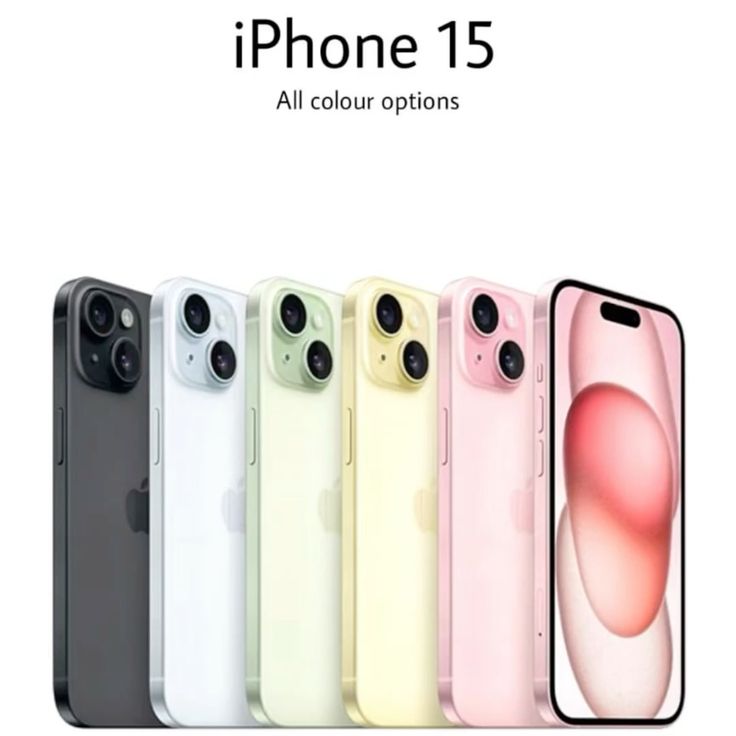
Available in a series of soft, pastel-leaning hues—Pink, Yellow, Green, Blue, and a sleek Black—the phone feels incredibly soft and premium to the touch. The frosted look naturally repels fingerprints, meaning the device looks pristine even after a long day of use without a case.
Aerospace-Grade Aluminum and Contoured Edges
The chassis is constructed from aerospace-grade aluminum, which strikes the perfect balance between durability and weight. Weighing in at just 171 grams, the 6.1-inch iPhone 15 is incredibly light and pocketable.
Furthermore, Apple introduced a subtle but impactful physical change: contoured edges. The sharp, 90-degree angles of the previous generations were slightly rounded off where the aluminum meets the glass. This makes the phone rest much more comfortably in the palm of your hand, drastically improving the ergonomics for one-handed texting or browsing. It also retains its IP68 rating, making it highly resistant to dust and capable of surviving accidental submersions in water.
2. Display: The Arrival of the Dynamic Island
The 6.1-inch form factor has long been considered the “Goldilocks” size for smartphones—big enough for immersive media consumption, but small enough to easily use with one hand. The screen on the iPhone 15 took this perfect size and injected it with flagship technology.
Unprecedented Brightness
The Super Retina XDR OLED display is nothing short of gorgeous. With a resolution of 2556 x 1179 pixels, text is exceptionally crisp and colors are perfectly calibrated. However, the most significant upgrade over the iPhone 14 is the luminance.
The iPhone 15 now matches the brightness levels of the Pro models. It reaches 1,000 nits of max brightness for typical use, peaks at 1,600 nits for HDR content, and hits an incredible 2,000 nits of peak outdoor brightness. This means that even under the glaring midday sun, the screen remains perfectly legible. You no longer have to squint or seek shade to read a text message, use GPS navigation, or frame a photograph.
The Death of the Notch
Perhaps the most visually striking change was the elimination of the infamous “notch.” The standard iPhone 15 adopted the Dynamic Island, a feature previously locked behind the “Pro” paywall.
The Dynamic Island completely reimagines how you interact with background tasks on iOS. This pill-shaped cutout houses the TrueDepth camera and Face ID sensors, but software brings it to life. It fluidly expands and transforms to show you essential, glanceable information. If you start a timer, call an Uber, play a song on Spotify, or get a phone call, the Dynamic Island bubbles up this information at the top of your screen, allowing you to control these activities without leaving the app you are currently using. It makes the user interface feel incredibly alive and intuitive.
(Note: The iPhone 15 display maintains a standard 60Hz refresh rate. It does not feature the 120Hz ProMotion technology found on the Pro models. While scrolling may not feel quite as buttery-smooth to a trained eye, this 60Hz cap is a major reason why the standard iPhone 15 enjoys such excellent battery life.)
3. The 48MP Camera Revolution: Pro-Level Photography
For years, the standard iPhone relied on a reliable but aging 12-megapixel main sensor. The iPhone 15 completely overhauled the camera system, inheriting the massive 48-megapixel Main camera architecture of the 14 Pro.
The 24MP Default Sweet Spot
When you take a photo, the iPhone 15 utilizes an advanced computational photography pipeline called the Photonic Engine. It takes a high-resolution 48MP image and combines it with a 12MP image optimized for light capture. The result is a stunning 24MP default photo. This effectively gives you double the resolution of the iPhone 14, ensuring incredible detail in hair, fabric textures, and foliage, while keeping the file size small enough that you won’t instantly fill up your iCloud storage.
The Magic of the 2x Optical-Quality Zoom
Because the main sensor is so massive (48 million pixels), Apple utilizes the middle 12 megapixels to offer a 2x optical-quality telephoto zoom. Without adding a third physical lens to the back of the phone, the iPhone 15 provides a 52mm equivalent focal length. This is perfect for zooming in on a subject without losing image quality, and it serves as a highly flattering focal length for portrait photography.
Next-Generation Portraits
Taking beautiful portraits no longer requires you to manually swipe to a dedicated “Portrait Mode.” The iPhone 15 features continuous depth capture. If the camera detects a person, dog, or cat in the viewfinder, it automatically saves the depth information alongside the photo.
This means you can snap photos quickly in the moment, and then go into your Photos app hours later to turn a regular picture into a stunning portrait with a blurred background. You can even tap the screen in the editing menu to seamlessly shift the focus from the subject in the foreground to a person in the background.
Phenomenal Video Capabilities
Apple remains the undisputed king of smartphone video, and the iPhone 15 continues this legacy. It shoots incredible 4K HDR video with Dolby Vision up to 60 frames per second. Features like Action Mode (which provides gimbal-like stabilization for highly active shots) and Cinematic Mode (which automatically shifts focus to create a Hollywood-style depth of field) make this phone a powerhouse for content creators and casual home-movie makers alike.
4. Performance: The Proven Power of the A16 Bionic
Powering the iPhone 15 is the A16 Bionic chip, the exact same highly efficient silicon that drove the flagship iPhone 14 Pro.
Blistering Speed and Efficiency
Featuring a 6-core CPU, a 5-core GPU, and a 16-core Neural Engine, the A16 Bionic is a proven workhorse. Whether you are batch-editing high-resolution photos, playing graphically demanding games like Genshin Impact, or rapidly multitasking between productivity apps, the iPhone 15 handles it all flawlessly without stuttering or overheating.
The 2026 Reality Check
In the context of 2026, the A16 Bionic remains a highly capable processor that easily outpaces many mid-range Android alternatives. The only caveat is that the A16 chip (coupled with 6GB of RAM) does not support the absolute latest, heavy on-device “Apple Intelligence” AI features that require the A17 Pro or A18 chips. However, for 95% of standard smartphone tasks, the A16 provides a perfectly smooth, instantly responsive experience that will not feel slow for many years.
5. The Transition to USB-C and All-Day Battery
The Universal Cable
Marking the end of an era, the iPhone 15 finally retired the proprietary Lightning port in favor of the globally recognized USB-C standard. This transition dramatically simplified the lives of users. You can now use a single cable to charge your MacBook, your iPad, and your iPhone. Furthermore, you can use a USB-C to USB-C cable to reverse-charge your AirPods or Apple Watch directly from the iPhone’s battery.
(Note: The USB-C port on the standard iPhone 15 operates at USB 2.0 speeds (480Mbps). While this is perfectly adequate for overnight charging, users who frequently transfer massive video files to a computer via a cable may notice the slower speed compared to the USB 3.0 speeds of the Pro models.)
All-Day Reliability
The combination of the highly efficient A16 Bionic chip, a standard 60Hz display, and a perfectly sized battery results in fantastic battery life. Apple rates the iPhone 15 for up to 20 hours of video playback. In real-world usage, this equates to a device that easily lasts a full day of heavy use—navigating, streaming, and texting—without needing a top-up before bedtime.
Lifesaving Technology
The iPhone 15 includes Apple’s suite of emergency features. Crash Detection uses advanced gyroscopes and accelerometers to detect a severe car crash, automatically calling emergency services if you are unresponsive. Emergency SOS via satellite allows you to connect to orbiting satellites to send text messages to emergency dispatchers even if you are hiking or driving in an area with zero cellular or Wi-Fi coverage.
6. Why the iPhone 15 is a Brilliant Buy in 2026
As newer generations hit the shelves, the standard iPhone 15 occupies the most lucrative position in the tech market: the “discounted premium” tier.
If you are upgrading from an iPhone 11, 12, or even 13, the jump to the iPhone 15 is monumental. You gain the massive camera upgrade, the beautifully bright display, the modern USB-C port, and the interactive Dynamic Island. Because Apple supports its phones for 5 to 6 years, an iPhone 15 purchased in 2026 will comfortably receive major iOS updates, security patches, and app support until the end of the decade.
7. Pros and Cons
| Pros | Cons |
| Dynamic Island: Replaces the notch with a highly useful, interactive UI element. | 60Hz Display: Lacks the ultra-smooth 120Hz scrolling of Pro models. |
| Massive Camera Leap: The 48MP sensor and 2x optical-quality zoom are game-changers. | USB 2.0 Speeds: Data transfer via cable is significantly slower than the Pro line. |
| Ultra-Bright Display: 2,000 nits peak outdoor brightness makes it flawless in the sun. | No On-Device AI: The A16 chip does not support Apple’s newest, heaviest AI-generation tools. |
| USB-C Port: Universal charging compatibility with Macs, iPads, and accessories. |
Final Verdict
The iPhone 15 is not just a stepping stone to a more expensive device; it is a masterfully balanced piece of technology in its own right. By bringing the most critical, daily-use features of the “Pro” lineup—like the incredibly bright display, the Dynamic Island, and a vastly superior camera system—into the standard model, Apple created a phone that perfectly serves the vast majority of consumers.
It is beautiful, it takes phenomenal photographs, it embraces universal charging standards, and it performs flawlessly. For those who want a premium Apple smartphone experience without paying top-tier flagship prices, the iPhone 15 remains the definitive, standard-setting choice.
