Post
Xiaomi Redmi Note 13 – Budget-Friendly Smartphone
May
Xiaomi Redmi Note 13: The Budget-Friendly Smartphone
Introduction: Redefining the Baseline of Modern Smartphones
In the relentlessly fast-paced world of mobile technology, the spotlight is almost exclusively dominated by ultra-premium flagships boasting aerospace-grade titanium frames, microscopic 3-nanometer processors, and astronomical price tags. However, the reality of the global smartphone market is vastly different; the vast majority of consumers simply want a device that works reliably, takes good photos, and doesn’t require emptying a savings account. Enter the Xiaomi Redmi Note 13.
Earning its well-deserved title as the “Budget-Friendly Smartphone,” the standard Redmi Note 13 represents a masterclass in compromise. Xiaomi engineered this device to answer a fundamental question: What are the absolute bare necessities for a modern smartphone experience, and how cheaply can we deliver them without making the phone feel cheap?
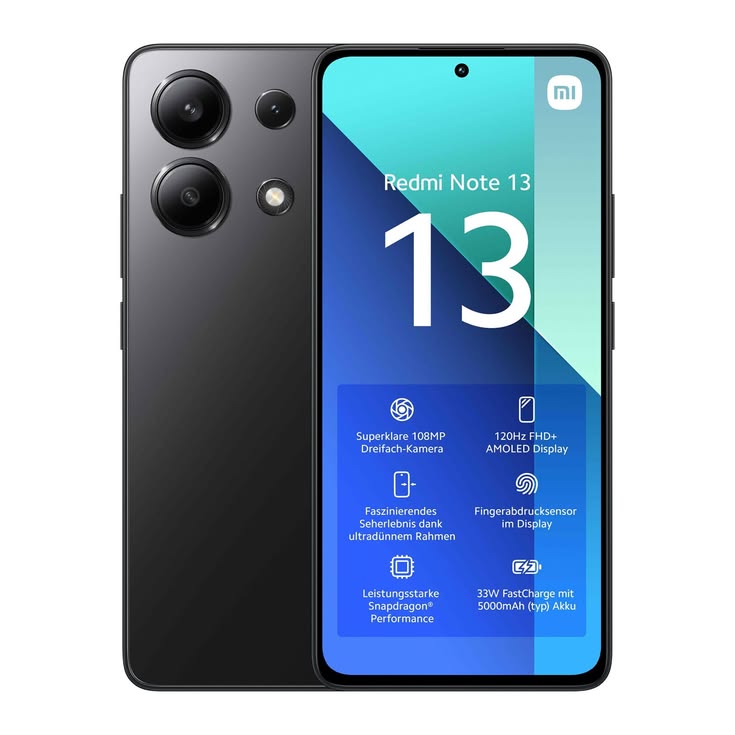
The result is a device that completely upends traditional budget expectations. By offering a buttery-smooth 120Hz AMOLED display, a massive 108-megapixel primary camera, and a reliable 5000mAh battery, the Redmi Note 13 provides an experience that mimics devices costing three times as much. As we look at the tech landscape in May 2026—a market saturated with expensive AI gimmicks—the enduring appeal and severely depreciated price of the Redmi Note 13 make it one of the most brilliant purchases available.
Whether you are a student on a strict budget, a parent purchasing a first phone for a teenager, or simply someone who views a smartphone as a utilitarian tool rather than a status symbol, this comprehensive deep dive explores why the Xiaomi Redmi Note 13 remains the undisputed champion of the budget tier.

1. Design and Ergonomics: Punching Far Above Its Weight
The most common sin of budget smartphones is that they look and feel exactly like budget smartphones—heavy, hollow, plastic, and wrapped in thick, unsightly bezels. The Redmi Note 13 actively rejects this aesthetic.
A Modern, Flagship-Inspired Aesthetic
When you pull the Redmi Note 13 out of its box, the immediate impression is one of modern sophistication. Xiaomi adopted a highly trendy, flat-edged design language that mimics the look of premium devices like the iPhone 15 or the flagship Xiaomi 14.
The device is remarkably thin, measuring just 7.6mm (on the 5G variant) and weighing a highly manageable 174 grams. This lightweight construction is a massive advantage in daily use; it prevents the wrist and finger fatigue that commonly plagues users of heavier, 230-gram “Pro Max” style devices. You can read an e-book in bed for hours or scroll through TikTok with one hand effortlessly.

The Bezel Revolution
Perhaps the most striking design element of the Redmi Note 13 is the front fascia. For years, budget phones were identifiable by a massive “chin” (the bezel at the bottom of the screen). Thanks to advanced packaging technologies previously reserved for high-end phones, Xiaomi managed to shrink the bezels to an incredibly thin margin all the way around the 6.67-inch display. This gives the phone an impressive, near-borderless, edge-to-edge look that completely betrays its low price tag.
Practical Durability and IP54 Rating
While the frame and back panel are constructed from polycarbonate (plastic) rather than aluminum or glass, it is a high-quality, dense plastic that does not feel hollow or creaky when squeezed. The 5G model features a matte finish that elegantly repels fingerprints, while the 4G model opts for a glossy finish that requires a bit more wiping to keep clean.
Crucially, the device boasts an IP54 rating for dust and splash resistance. While you cannot submerge this phone in a swimming pool, it offers genuine, laboratory-tested peace of mind against the realities of daily life—like being caught in a sudden rain shower or accidentally spilling a drink near the device on a dinner table. The display is further protected by Corning Gorilla Glass (Glass 3 on the 4G, Glass 5 on the 5G), ensuring a baseline level of scratch and shatter resistance.
2. The Visual Canvas: 120Hz AMOLED in the Budget Tier
If there is one single feature that makes the Redmi Note 13 an irresistible purchase, it is the display. Historically, spending under $250 meant settling for a dim, washed-out LCD screen with a slow 60Hz refresh rate. Xiaomi demolished that standard.
The OLED Advantage
Both the 4G and 5G variants of the Redmi Note 13 feature a massive 6.67-inch AMOLED display with a sharp Full HD+ resolution (2400 x 1080 pixels). Because it is an OLED panel, every single pixel illuminates individually. When displaying black, the pixels physically turn off, resulting in an infinite contrast ratio. This makes viewing dark-themed applications, scrolling through high-resolution photography, or watching Netflix an incredibly immersive experience with punchy colors and true, pitch-black shadows.
Buttery-Smooth 120Hz Refresh Rate
The inclusion of a 120Hz refresh rate in a budget smartphone is nothing short of revolutionary. This means the screen updates its image 120 times every second. The result? Every swipe, scroll, app launch, and system animation feels instantaneously responsive, fluid, and completely frictionless. It provides the “illusion of speed,” making the phone feel significantly faster and more premium than its internal processor would suggest.
Exceptional Outdoor Brightness
Budget screens usually fail under direct sunlight, forcing you to cup your hand over the screen just to read a text message. The Redmi Note 13 addresses this beautifully. The 4G variant, impressively, can reach a peak brightness of up to 1,800 nits, while the 5G variant pushes a very respectable 1,000 nits. In either case, the display remains highly legible outdoors, ensuring you can use GPS navigation or frame a photograph without squinting.
For users who read at night, the display is certified by TÜV Rheinland for low blue light emissions and flicker-free performance, preventing the eye strain and headaches associated with cheap, flickering screens.
3. Performance: The 4G vs. 5G Divide and HyperOS
When discussing the performance of the standard Redmi Note 13, it is vital to distinguish between the two primary versions available on the market: the 4G model and the 5G model. Xiaomi tailored the internal silicon to hit specific price points in different global regions.
The 4G Model: Snapdragon 685 (The Efficiency Choice)
The Redmi Note 13 4G is powered by the Qualcomm Snapdragon 685 processor. Built on a 6-nanometer manufacturing process, this chip is designed explicitly for efficiency rather than raw, blistering speed.
It handles everyday smartphone tasks—like browsing Google Chrome, chatting on WhatsApp, scrolling through Instagram, and watching YouTube—with absolute ease. However, it is not a heavy gaming chip. If you try to run graphically intense titles like Genshin Impact on high settings, it will stutter. For casual games like Candy Crush or Subway Surfers, it performs flawlessly.
The 5G Model: Dimensity 6080 (The Power Choice)
The Redmi Note 13 5G is equipped with the significantly more capable MediaTek Dimensity 6080 processor. This octa-core chip not only brings next-generation Sub-6 5G connectivity for much faster download speeds and lower latency, but it also offers vastly superior CPU and GPU performance compared to the Snapdragon 685.
If you are a mobile gamer on a budget, the 5G variant is the clear winner. It can handle modern 3D games like PUBG Mobile at medium settings while maintaining highly stable frame rates. Furthermore, the Dimensity chip is paired with faster internal storage, meaning apps install quicker and the phone boots up faster.
The HyperOS Upgrade
Regardless of which model you choose, one of the biggest advantages of buying this phone in 2026 is the software. Originally launched with MIUI 14, Xiaomi has aggressively pushed updates to upgrade the Redmi Note 13 to the highly optimized HyperOS.
HyperOS is significantly lighter than older Xiaomi software. It drastically reduces the amount of internal storage the operating system occupies, aggressively compresses background apps to keep the phone running smoothly even with just 6GB of RAM, and introduces a much cleaner, iOS-inspired control center and lock screen customization suite.
4. The 108MP Camera: High Resolution Without the Premium
In the budget segment, camera quality is usually the first casualty of cost-cutting. While the Redmi Note 13 will not compete with a $1,200 flagship in a dark room, it offers a remarkably capable daylight shooter.
The 108-Megapixel Primary Sensor
The star of the optical array is the massive 108-megapixel main camera (f/1.7 aperture). In standard shooting scenarios, the camera utilizes “pixel binning”—combining 9 microscopic pixels into one larger pixel. This outputs a highly detailed, bright, and vibrant 12-megapixel default photo that requires very little storage space.
However, if you are standing in front of a beautiful landscape or a detailed architectural structure with plenty of sunlight, you can switch to the dedicated 108MP mode. This captures an immense amount of uncompressed detail, allowing you to aggressively crop into the photo later without it becoming a pixelated mess.
In-Sensor Zoom
Because the main sensor has such an incredibly high resolution, Xiaomi implemented a 3X “In-Sensor” zoom. Instead of stretching the image digitally (which ruins quality), the camera literally crops into the physical center of the 108 million pixels. This provides an optical-quality zoom that is perfect for capturing distant subjects or shooting flattering portraits with natural background compression.
The Supporting Cast and Software AI
The rear array is rounded out by an 8MP ultra-wide lens, which is great for sprawling outdoor shots, though it struggles with detail in low light. There is also a 2MP macro lens, which is largely a spec-sheet filler.
Where the Redmi Note 13 has improved dramatically by 2026 is through software updates. Xiaomi’s AI Scene Detection has been refined significantly. It can now handle low-light shots much more accurately, reducing digital noise and artificially brightening shadows to make nighttime photos totally usable for social media. The 16MP front-facing camera is surprisingly sharp and handles 1080p video calls beautifully.
5. Practicality and Endurance: Features Flagships Forgot
One of the great ironies of the smartphone industry is that cheap phones often retain the highly practical, user-friendly features that expensive flagships ruthlessly eliminate. The Redmi Note 13 is a prime example of this phenomenon.
The 5000mAh Marathon Battery
The device houses a massive 5000mAh battery. Because neither the Snapdragon 685 nor the Dimensity 6080 are power-hungry flagship chips, this battery capacity translates to phenomenal, unrivaled endurance.
For the average user—sending texts, browsing the web, and making a few phone calls—the Redmi Note 13 easily functions as a two-day phone. Even for heavy users who spend hours watching videos or navigating via GPS, it is virtually impossible to kill this phone in a single day.
33W Fast Charging
When it is finally time to recharge, the phone supports 33W wired fast charging. While it doesn’t boast the ridiculous 19-minute charge times of the Pro+ models, 33W is still impressively quick for the budget tier. It can charge the phone from 0% to 50% in roughly 29 minutes, and a full charge takes just over an hour. Crucially, Xiaomi includes the 33W charging brick directly in the box, saving you from spending extra money on accessories.
The Return of the Kings: Headphone Jack and IR Blaster
In 2026, finding a phone with a 3.5mm headphone jack is a rarity. The Redmi Note 13 proudly features one, allowing you to use cheap, reliable wired earbuds without dealing with Bluetooth latency or charging dead AirPods.
Furthermore, it retains Xiaomi’s signature IR (Infrared) Blaster on the top edge. This incredibly useful feature turns the phone into a universal remote control, allowing you to turn on your television, adjust your air conditioning unit, or control a projector with a few taps on the screen.
The device also supports expandable storage via a microSD card slot, meaning you can buy the cheaper 128GB version of the phone and cheaply add up to 1TB of extra space for photos and downloaded movies later.
6. The 2026 Perspective: The Ultimate Bargain
As we evaluate the tech market in May 2026, the true brilliance of the Redmi Note 13 is revealed in its extreme depreciation.
When it launched in late 2023, it retailed around the $200–$250 mark. In 2026, as newer models like the Note 14 or Note 15 series occupy the spotlight, the price of a brand-new, old-stock, or certified refurbished Redmi Note 13 has plummeted. You can frequently find excellent condition models hovering between $140 and $170 USD.
Why Buy It Today?
At this price point, the value proposition is practically unbeatable. You are acquiring a device with a stunning 120Hz AMOLED display, a massive 108MP camera, and a battery that refuses to die, all wrapped in a sleek, modern chassis with an IP54 rating.
It is the absolute perfect purchase for:
Students: Who need a reliable, cheap phone for social media and communication.
Parents: Buying a first smartphone for a child, where spending $800 on a fragile flagship is an unwise risk.
Digital Minimalists: Who want a cheap, functional device that handles basic apps without any unnecessary luxury fluff.
Travelers: Who need an unlocked, reliable backup phone with a dual-SIM tray and incredible battery life for navigating foreign countries.
7. Pros and Cons
| Pros | Cons |
| 120Hz AMOLED Display: Deep blacks, vibrant colors, and buttery-smooth scrolling are virtually unheard of at this price point. | Plastic Build: While well-constructed, it does not offer the premium, weighty feel of glass and aluminum flagships. |
| Incredible Battery Life: The 5000mAh battery paired with efficient processors easily provides up to two days of usage. | Average Low-Light Camera: The 108MP sensor struggles in very dark environments without relying heavily on software processing. |
| Modern, Thin Design: The ultra-thin bezels and flat edges make it look significantly more expensive than it actually is. | Bloatware: The software comes pre-loaded with several third-party apps and games that must be manually uninstalled. |
| Practical Features: Includes a 3.5mm headphone jack, an IR blaster, a microSD card slot, and the charger in the box. | No Wireless Charging: As expected in the budget tier, Qi wireless charging hardware is completely omitted. |
| Unbeatable Value: 2026 pricing makes it the smartest possible purchase for users who want basics done brilliantly. | Video Recording Limitations: Video recording is generally capped at 1080p at 30fps; it lacks 4K capabilities. |
Final Verdict
The Xiaomi Redmi Note 13 is a triumph of utilitarian engineering. It proves definitively that a low price tag does not automatically equal a miserable user experience.
By brilliantly prioritizing the features that people actually interact with the most—a massive, beautiful screen, a battery that lasts forever, and a capable point-and-shoot camera—Xiaomi created a device that democratizes premium technology. It doesn’t try to be a $1,000 phone; it simply tries to be the absolute best $150 phone in existence, and it succeeds wildly.
In 2026, the Redmi Note 13 stands as the definitive benchmark for the budget tier. If you demand a reliable, smooth, and modern smartphone experience but refuse to be extorted by flagship prices, the Xiaomi Redmi Note 13 is not just a budget-friendly option—it is arguably one of the smartest tech purchases you can make.
