
Post
Xiaomi Redmi Note 13 Pro – Balanced Performance Phone
May
Xiaomi Redmi Note 13 Pro
Introduction: The Masterpiece of the Middle Ground
In the sprawling ecosystem of modern smartphones, the “middle child” often faces an identity crisis. Wedged between the hyper-budget entry models and the ultra-expensive, feature-stuffed “Pro Plus” or “Ultra” variants, the standard “Pro” model can sometimes be overlooked. However, Xiaomi flipped the script entirely with the Redmi Note 13 Pro.
Earning its highly accurate moniker as the “Balanced Performance Phone,” this device was meticulously engineered to answer a very specific question: What are the features that actually matter to the daily life of a consumer, and how can we deliver them flawlessly without inflating the price?
By actively choosing not to include exorbitant, niche features—like 120W charging or a curved display—Xiaomi was able to allocate resources into perfecting the core experience. They delivered a hyper-crisp 1.5K display, a monstrous 200-megapixel camera, and the highly efficient Snapdragon 7s Gen 2 processor. As we evaluate the market in May 2026, the Redmi Note 13 Pro stands out as an oasis of practicality and value in a tech world obsessed with extremes. For students, young professionals, and savvy tech enthusiasts who want the absolute most bang for their buck, this comprehensive deep dive explores why the Redmi Note 13 Pro remains a spectacular, balanced powerhouse.
1. Design and Durability: Premium Feel, Practical Build
The design philosophy of the Redmi Note 13 Pro is rooted in clean, modern aesthetics and practical durability. It abandons the curved edges of its more expensive sibling in favor of a sleek, flat-edged design that many users actually prefer for its secure grip.
A Sophisticated, Boxy Aesthetic
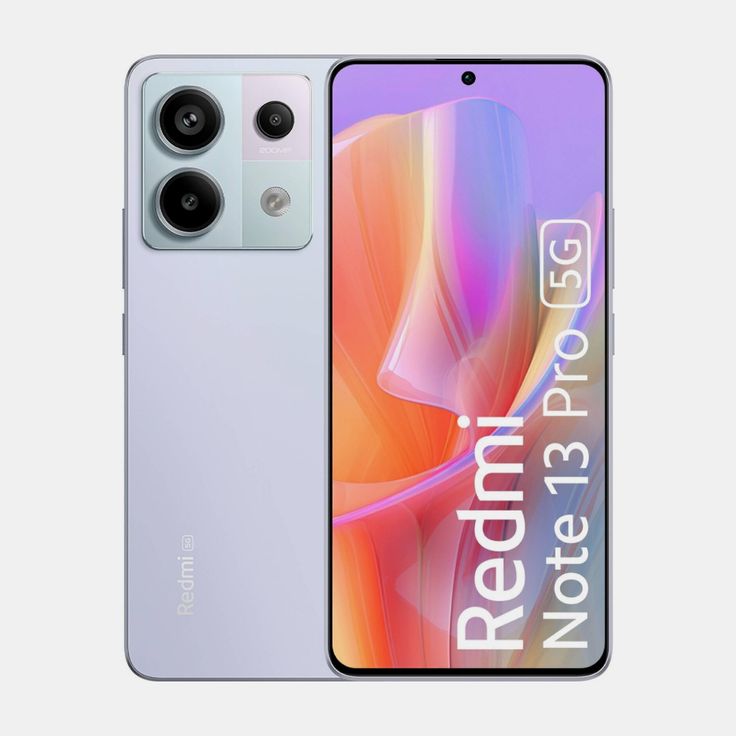
The device features a highly polished, flat polycarbonate frame that mimics the look of brushed aluminum. The rear glass panel is available in a series of highly appealing, sophisticated colors: Midnight Black, Ocean Teal, and a stunning Aurora Purple that features subtle, pastel color-blocking around the camera module.
Weighing in at a highly manageable 187 grams and measuring just 7.98mm thick, the phone feels incredibly well-balanced in the hand. It lacks the top-heavy awkwardness of some modern flagships, making it a joy to use for extended periods, whether you are reading, gaming, or scrolling through long web pages.
Flagship-Level Glass Protection
Where mid-range phones often compromise is the front glass, but the Redmi Note 13 Pro offers an incredible surprise: Corning Gorilla Glass Victus. Previously reserved strictly for $1,000+ premium flagships, Victus provides industry-leading resistance against deep scratches and shattering from accidental drops.
Furthermore, the device holds an IP54 rating for dust and splash resistance. While you shouldn’t take it swimming (unlike the IP68-rated Pro+ model), it provides crucial peace of mind if you are caught in a light rain shower or accidentally spill a glass of water near the device on your desk.
2. A Visual Marvel: The 1.5K CrystalRes AMOLED Display
The display is where the “balanced” philosophy truly shines. Xiaomi equipped the Note 13 Pro with a screen that looks and feels like it belongs on a phone costing twice as much.
The 1.5K Resolution Sweet Spot
The 6.67-inch AMOLED display features a “CrystalRes” resolution of 2712 x 1220 pixels. This creates a razor-sharp pixel density of 446 PPI. Xiaomi recognized that standard 1080p can sometimes look slightly soft on a 6.67-inch screen, but full WQHD+ drains the battery far too quickly. This 1.5K resolution is the perfect middle ground, offering incredibly crisp text and highly detailed images without sacrificing battery endurance.
120Hz Fluidity and Blinding Brightness
The display supports a 120Hz adaptive refresh rate. System animations, app scrolling, and supported mobile games feel instantaneously responsive and buttery-smooth.
When you step out of your house and into the glaring midday sun, the display automatically ramps up to an astonishing peak brightness of 1,800 nits. You never have to squint or seek shade to read a map or frame a photograph. The screen is also calibrated for professional media consumption, supporting a 12-bit color depth (capable of displaying 68 billion colors) and featuring Dolby Vision support for stunning, high-contrast HDR video playback.
Prioritizing Eye Health
For users who spend hours reading on their phones at night, Xiaomi implemented 1920Hz high-frequency PWM dimming. This completely eliminates the invisible, microscopic screen flicker that occurs when OLED screens are turned down to low brightness, drastically reducing eye strain, visual fatigue, and headaches.
3. The Performance Core: Snapdragon 7s Gen 2
To ensure the phone handles daily tasks and moderate gaming without breaking a sweat, Xiaomi turned to Qualcomm for an incredibly efficient, highly capable processor.
4-Nanometer Efficiency
The Redmi Note 13 Pro is powered by the Snapdragon 7s Gen 2 Mobile Platform. Built on a highly advanced 4-nanometer manufacturing process, this octa-core processor strikes the perfect balance between raw power and thermal efficiency.
Paired with up to 12GB of RAM and ultra-fast storage, the device excels at heavy multitasking. You can jump between a heavy web browser, a Zoom video call, and social media applications without the phone stuttering or aggressively closing apps in the background.
Stable Gaming and Thermal Management
While it is not marketed as a dedicated “gaming phone,” the Adreno 710 GPU ensures it holds its own. It can easily run popular titles like Call of Duty: Mobile or PUBG Mobile at high settings with very stable frame rates.
More importantly, the 4nm architecture ensures that the chip runs incredibly cool. Even during a grueling 90-minute video conferencing session or an extended gaming run, the phone’s internal thermal management prevents severe overheating, keeping the chassis comfortable to the touch and preventing battery degradation.
4. The Optical Powerhouse: 200MP Precision Photography
The most “unbalanced” feature of the Redmi Note 13 Pro—in the best way possible—is its primary camera. It brings massive, ultra-high-resolution photography to the mid-range tier.
The 200MP Main Sensor with OIS
The star of the show is the massive 200-megapixel main sensor equipped with an f/1.65 aperture and, crucially, hardware Optical Image Stabilization (OIS).
By default, the camera utilizes 16-in-1 pixel binning, combining data from 16 tiny pixels into one massive “super pixel.” This allows the camera to gather an immense amount of light, producing exceptionally vibrant, sharp, and noise-free 12.5MP photos even in dimly lit restaurants or during nighttime city walks. The OIS acts as an invisible tripod, compensating for handshakes and ensuring your low-light shots are never blurry.
Optical-Grade Lossless Zoom
Because the physical sensor boasts 200 million pixels, Xiaomi implemented a brilliant zooming technique. Instead of relying on a grainy digital software zoom or adding a cheap, low-resolution telephoto lens to the back of the phone, the camera literally crops into the center of the massive 200MP sensor.
This provides a true 2X and 4X lossless, optical-grade zoom. It effectively gives you the benefits of a dedicated portrait and zoom lens without the extra hardware cost, allowing you to capture highly detailed close-ups and flattering portraits with natural background compression.
(Note: The supporting cast includes an 8MP ultra-wide lens that is perfectly adequate for sweeping landscapes in good lighting, and a 2MP macro lens that is mostly a novelty. The 16MP front-facing camera takes excellent, sharp selfies and handles 1080p video calls beautifully).
5. The Endurance Runner: 5100mAh Battery and 67W Charging
A phone designed for balanced, everyday performance must have a battery that users can rely on heavily, and the Redmi Note 13 Pro delivers in spades.
The 5100mAh Powerhouse
Interestingly, the standard Pro model actually features a slightly larger battery capacity than the more expensive Pro+ model, housing a massive 5100mAh battery.
When you combine this massive capacity with the extreme power efficiency of the 4nm Snapdragon 7s Gen 2 chip, the result is phenomenal endurance. The Redmi Note 13 Pro is a legitimate 1.5-day phone for moderate users. Even for heavy power users who rely on constant GPS navigation, 5G media streaming, and prolonged camera use, the phone easily sails past bedtime with 20% to 30% battery remaining.
67W Turbo Charging
When it is finally time to top up, the device supports incredibly fast 67W wired Turbo Charging.
If your phone is completely dead, plugging it in will take the battery from 0% to 51% in just 15 minutes, and it will reach a full 100% charge in roughly 45 minutes. It completely alters your charging habits; you can plug the phone in while you take a quick shower and get dressed, and it will have more than enough power to last you through a long workday and an evening out.
6. The 2026 Perspective: The Ultimate Value Proposition
As we evaluate the tech market in May 2026, the true brilliance of the Redmi Note 13 Pro is revealed in its pricing and longevity.
As the industry has moved forward, the price of the Redmi Note 13 Pro has dropped significantly on the secondary and refurbished markets. The value proposition here is absolutely staggering. You are acquiring a device with a hyper-crisp 1.5K 120Hz display, Gorilla Glass Victus protection, a highly capable Snapdragon processor, and a monstrous 200MP camera for a fraction of the cost of a modern flagship.
For the vast majority of smartphone users who do not genuinely need a curved display, 120W charging, or an ultra-high-end gaming processor, the standard Redmi Note 13 Pro provides 95% of the premium flagship experience at roughly 30% of the cost.
7. Pros and Cons
| Pros | Cons |
| 200MP OIS Camera: Produces incredibly sharp, detailed photos and offers brilliant 4X lossless in-sensor zoom. | Secondary Cameras: The 8MP ultra-wide is strictly average, and the 2MP macro is largely unnecessary. |
| 1.5K AMOLED Display: 120Hz refresh rate, 1800 nits peak brightness, and Dolby Vision support create a flawless viewing experience. | IP54 vs IP68: It is splash-proof, but it lacks the full waterproof submersion rating of the Pro+ model. |
| Gorilla Glass Victus: Flagship-level front glass provides immense peace of mind against scratches and drops. | Plastic Frame: While it looks metallic, the structural frame of the phone is made of polycarbonate. |
| Exceptional Battery Life: The 5100mAh battery paired with the efficient Snapdragon chip offers true all-day endurance. | Bloatware: Like many Xiaomi devices, it requires a few minutes to uninstall pre-loaded third-party apps upon setup. |
| Balanced Processing: The Snapdragon 7s Gen 2 runs cool, handles multitasking flawlessly, and runs most games smoothly. |
Final Verdict
The Xiaomi Redmi Note 13 Pro is a masterclass in targeted, intelligent engineering. By consciously avoiding unnecessary, price-inflating gimmicks, Xiaomi created the quintessential “Balanced Performance Phone.”
It excels brilliantly at the core fundamentals that actually dictate a great user experience: a gorgeous and bright display, a battery that simply refuses to quit, a highly dependable processor that stays cool, and a primary camera that captures stunning memories in any lighting condition.
In 2026, paired with a highly attractive, depreciated price point, the Redmi Note 13 Pro is no longer just a “good mid-range phone”; it is an absolute steal. If you demand a premium, reliable smartphone experience without the crushing weight of a flagship price tag, the Xiaomi Redmi Note 13 Pro is a remarkably smart, highly recommended purchase that will serve you flawlessly for years to come.
