
Post
Xiaomi 14 Ultra – Leica Camera Flagship Smartphone
May
Xiaomi 14 Ultra
Introduction: Blurring the Line Between Smartphone and DSLR
In the highly competitive arena of premium smartphones, the race to build the ultimate camera phone has often resulted in software gimmicks and exaggerated specifications. However, when Xiaomi partnered with the legendary German optics manufacturer Leica to create the Xiaomi 14 Ultra, they took a radically different approach. They didn’t just aim to build a phone with a great camera; they engineered a professional-grade compact camera that just happens to run an operating system and make phone calls.
Earning its title as the definitive “Leica Camera Flagship Smartphone,” the Xiaomi 14 Ultra represents a monumental leap in mobile optical engineering. It introduced the world to a massive 1-inch Sony LYT-900 sensor paired with a true stepless variable aperture, fundamentally changing what photographers could expect from a device that fits in their pocket.
As we look at the smartphone landscape in May 2026, amidst a sea of AI-generated imagery and heavy computational processing, the Xiaomi 14 Ultra stands out as a purist’s dream. It delivers a uniquely authentic, DSLR-like organic quality to its photos that even newer iterations struggle to replicate perfectly. For street photographers, visual artists, and tech enthusiasts who demand absolute uncompromising optical excellence, the Xiaomi 14 Ultra remains an absolute masterpiece. This comprehensive deep dive explores the architecture, the unparalleled optics, and the enduring legacy of this photographic titan.
1. Engineering a Modern Classic: Design and Materials
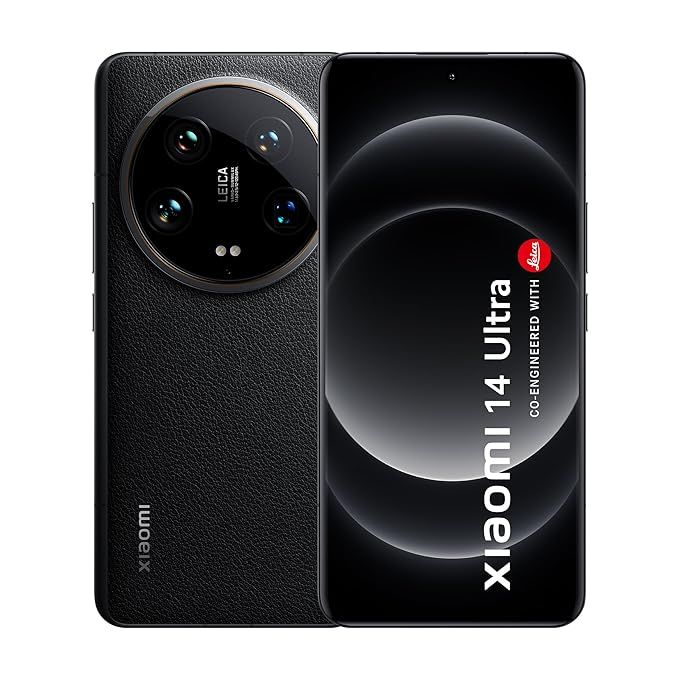
The design philosophy of the Xiaomi 14 Ultra is a direct homage to classic rangefinder cameras. It is bold, purposeful, and unashamedly focused on the massive circular camera module that dominates its rear panel.
High-Strength 6M42 Aluminum and Nano-Tech Vegan Leather
Moving away from the fragile glass backs of traditional flagships, Xiaomi draped the back of the 14 Ultra in a newly developed nano-tech vegan leather. This material serves multiple purposes: it drastically improves grip, naturally repels fingerprint smudges, and provides a tactile warmth that mimics the feel of a traditional Leica M-series camera.
Beneath this leather lies a completely redesigned chassis. Xiaomi utilized a brand-new 6M42 integrated high-strength aluminum frame material. The metal frame physically extends slightly to the back of the body, creating a highly rigid structure that doubles the bend resistance compared to previous generations. Weighing in at roughly 219 grams, it has a substantial, premium heft that feels perfectly balanced in the hand, especially when framing a shot.
Xiaomi Shield Glass and Durability
The front of the device is protected by Xiaomi Shield Glass, an ultra-durable material engineered to withstand severe impacts and deep scratches far better than standard smartphone glass. The device also boasts a robust IP68 rating, ensuring it is entirely dust-tight and capable of surviving submersion in water. Whether you are caught in a sudden downpour while shooting street photography or shooting near a dusty trail, the Xiaomi 14 Ultra is built to survive the elements.
2. The Canvas: All Around Liquid Display
A professional camera requires a professional viewfinder, and the display on the Xiaomi 14 Ultra is nothing short of breathtaking.
WQHD+ Brilliance and 3000 Nits Peak Brightness
The device features a massive 6.73-inch WQHD+ AMOLED display (3200 x 1440 resolution) boasting a razor-sharp 522 pixels per inch. Xiaomi utilized their custom C8 display panel, which offers incredibly high light efficiency. The most striking aspect of this screen is its luminance. It pushes a typical brightness that makes indoor use vibrant, but when stepping outdoors or viewing HDR content, it peaks at a blinding 3,000 nits. Framing a photo under the harsh, direct midday sun is effortless; the screen remains perfectly legible without you needing to cup your hand over the display.
1-120Hz LTPO and Dolby Vision
The display utilizes advanced LTPO technology, allowing the refresh rate to dynamically scale from a battery-saving 1Hz all the way up to a buttery-smooth 120Hz. Whether you are scrolling quickly through your massive photo library or playing a high-frame-rate game, the UI feels instantaneous and completely frictionless.
Furthermore, the display is calibrated to professional standards, supporting the DCI-P3 color gamut, 12-bit color depth, and Dolby Vision. When you capture an UltraHDR photograph or a 4K Dolby Vision video, you are viewing the true, uncompressed dynamic range directly on the device, with infinite blacks and blindingly bright highlights.
The “Liquid” Aesthetic
Xiaomi calls this the “All Around Liquid Display.” It curves ever so slightly on all four edges and corners, creating an illusion that the screen is hovering above the frame like a drop of surface-tensioned water. This provides the aesthetic beauty of a curved screen while minimizing the accidental palm touches that plague aggressively curved displays.
3. The Pinnacle of Mobile Optics: The Leica Quad Camera System
The heart, soul, and primary selling point of the Xiaomi 14 Ultra is its unparalleled camera array. Co-engineered with Leica, this system utilizes four lenses covering six distinct optical focal lengths, from 12mm all the way to 120mm.
The Main Event: 1-Inch LYT-900 Sensor with Variable Aperture
The main camera is a technological marvel. It utilizes the Sony LYT-900 1-inch sensor. In the world of photography, sensor size dictates light gathering capability, dynamic range, and natural depth of field. A 1-inch sensor in a smartphone is massive, capturing an astonishing amount of light and detail.
What elevates this sensor to legendary status is the Leica Summilux optical lens featuring a stepless variable aperture from ƒ/1.63 to ƒ/4.0. Unlike most smartphones that have a fixed aperture, the 14 Ultra has actual mechanical aperture blades that physically open and close.
Drop it to ƒ/1.63 in low light, and the sensor drinks in light while creating a genuine, optical background blur (bokeh) that computational portrait modes cannot match.
Stop it down to ƒ/4.0 for landscape shots or macro photography to ensure everything from the foreground to the background remains tack-sharp.
The Dual Telephoto Setup: 75mm and 120mm
Zooming on the Xiaomi 14 Ultra is not an afterthought; it is a core feature. The device utilizes two separate telephoto lenses, both using highly capable 50MP Sony IMX858 sensors.
The 75mm Floating Telephoto (ƒ/1.8): This 3.2x optical zoom lens is arguably the most versatile on the phone. The 75mm focal length is the classic standard for portrait photography, providing incredibly flattering facial compression. Because it features a “floating” focus group, it can also focus as close as 10cm, making it an exceptional telemacro lens for capturing intricate details of flowers or insects.
The 120mm Periscope Telephoto (ƒ/2.5): Offering a 5x optical zoom, this periscope lens allows you to reach out and compress distant landscapes or capture architectural details. Remarkably, it also doubles as a macro lens with a minimum focusing distance of 30cm.
The 12mm Ultra-Wide and Street Photography
Rounding out the quad setup is a 50MP 12mm Ultra-Wide lens with a sweeping 122-degree field of view. It is completely distortion-free at the edges and perfectly color-matched to the other three lenses.
Leica’s influence shines brightest in the Street Photography mode (Fastshot). Covering focal lengths from 23mm to 135mm, this mode allows you to pre-focus the camera using hyperfocal distance logic. With a capture speed of just 0.7 seconds, you can raise the phone and capture a fleeting moment on the street instantly, without waiting for the autofocus to hunt for a subject. The inclusion of the “Leica Authentic” color profile provides deep shadows, high contrast, and a dramatic vignette that gives photos a distinctive, artistic soul.
Professional Videography
The 14 Ultra is a cinematic powerhouse. It supports 8K video recording at 30fps across all four focal lengths. For slow-motion enthusiasts, it captures 4K at 120fps. Crucially, it supports 10-bit LOG video recording, allowing professional color graders to extract maximum dynamic range in software like DaVinci Resolve, and it shoots natively in Dolby Vision HDR.
The Ultimate Accessory: The Photography Kit
To complete the transformation from phone to camera, Xiaomi released the Photography Kit. This accessory snaps onto the phone via USB-C and provides a substantial, ergonomic camera grip. It features a two-stage physical shutter button, a zoom lever, a customizable dial (for adjusting EV or aperture), a dedicated video recording button, and an integrated 1500mAh battery to keep the phone charged during long shooting sessions. Attaching this kit fundamentally changes how you interact with the device; it forces you to slow down and shoot with intention.
4. Uncompromising Performance: Snapdragon 8 Gen 3
Driving this immense photographic data requires serious processing power. The Xiaomi 14 Ultra is equipped with the Qualcomm Snapdragon 8 Gen 3 Mobile Platform.
4nm Efficiency and Raw Power
Built on a cutting-edge 4nm manufacturing process, this chip features a highly advanced CPU and the Adreno 750 GPU. Paired with 16GB of ultra-fast LPDDR5X RAM and UFS 4.0 storage, the device is ridiculously fast. Whether you are processing massive 50MP UltraRAW 2.0 files in Adobe Lightroom Mobile, playing graphics-heavy games like Genshin Impact at maximum settings, or rendering 4K video timelines, the 14 Ultra handles the workload with absolute ease.
Dual-Channel IceLoop Cooling
To prevent thermal throttling during intense gaming or extended 8K video recording, Xiaomi implemented their proprietary Dual-Channel IceLoop System. This advanced liquid cooling mechanism physically separates the thermal loops for the processor and the camera modules, ensuring that neither component overheats the other. This allows the phone to sustain maximum performance for significantly longer periods than standard flagships.
5. Power Management: HyperCharge Technology
A device with a massive 1-inch sensor, a 3000-nit display, and a flagship processor requires serious power management.
The 5000mAh Battery
The Xiaomi 14 Ultra is powered by a robust 5000mAh high-density battery, managed by the custom Xiaomi Surge Battery Management system. In real-world usage, this provides solid all-day endurance for moderate users. However, if you are actively using the camera for hours, pushing the screen brightness to its max, and recording video, you will drain the battery faster than standard phones.
Blistering HyperCharge Speeds
To combat heavy battery drain, Xiaomi included industry-leading charging capabilities.
90W Wired HyperCharge: Using the included charging brick, the phone can go from completely dead to 100% fully charged in an astonishing 33 minutes (in Boost mode).
80W Wireless HyperCharge: If you prefer wire-free convenience, the phone supports absurdly fast 80W wireless charging, bringing the battery to 100% in just 46 minutes. It also supports reverse wireless charging, allowing you to top up your earbuds or smartwatch directly from the phone’s back.
6. The 2026 Perspective: A Lasting Legacy
As we evaluate the market in May 2026, the Xiaomi 15 Ultra has already been introduced, boasting the newer Snapdragon 8 Elite chip and increased telephoto megapixel counts. So, is the 14 Ultra still worth it?
The emphatic answer from the photography community is yes.
While newer models push AI enhancements heavily, many professional photographers and enthusiasts actively prefer the image processing of the Xiaomi 14 Ultra. The 14 Ultra has a specific “organic” quality, especially when using the Leica Authentic profile. It produces images that feel less like “smartphone photos” and more like actual photographs taken on a dedicated mirrorless camera. The stepless variable aperture remains a massive advantage for controlling physical depth of field rather than relying on software blurring.
Furthermore, as a slightly older model, the price of the Xiaomi 14 Ultra has become significantly more accessible on the secondary and refurbished markets, making it an incredible bargain for anyone who prioritizes optical camera quality above all else.
7. Pros and Cons
| Pros | Cons |
| 1-Inch Sensor & Variable Aperture: Unmatched optical control, producing genuine DSLR-like depth of field and low-light performance. | Weight and Bulk: The massive camera module makes the phone top-heavy and difficult to use comfortably with one hand. |
| Leica Color Science: “Leica Authentic” mode provides high-contrast, moody, and highly organic photo aesthetics. | Battery Life: Heavy camera usage and the ultra-bright display can drain the 5000mAh battery quickly during intensive shoots. |
| Exceptional Telephoto Lenses: The 75mm floating telephoto and 120mm periscope provide incredible zoom and stunning macro capabilities. | HyperOS Software: The operating system, while fast, can sometimes feel cluttered compared to cleaner Android interfaces. |
| Photography Kit: The optional camera grip completely transforms the ergonomics, making it a joy to shoot with for hours. | Price of Entry: Even at discounted 2026 prices, it remains a premium, expensive device. |
Final Verdict
The Xiaomi 14 Ultra is not a smartphone for everyone. If you just want a phone to scroll through TikTok and occasionally snap a quick picture of your lunch, this device is absolute overkill.
However, if photography is your passion—if you understand the relationship between aperture, shutter speed, and ISO, and if you crave the tactile experience of a dedicated camera—the Xiaomi 14 Ultra is a revelation. By combining the massive light-gathering power of a 1-inch sensor, the physical control of a stepless mechanical aperture, and the legendary color science of Leica, Xiaomi created a device that legitimately blurs the line between mobile phone and professional equipment.
In 2026, it stands proudly not just as a piece of outdated technology, but as a modern classic. It is a bold, uncompromising statement that mobile photography does not have to rely purely on artificial intelligence; it can still rely on the timeless physics of brilliant optics.
